Presentation
Who we are
The GENTT (Textual Genres for Translation) Research Group, based at the Department of Translation and Communication at the Universitat Jaume I in Spain, has been working since the year 2000 on the creation of a multilingual electronic encyclopaedia of specialised texts for translation.
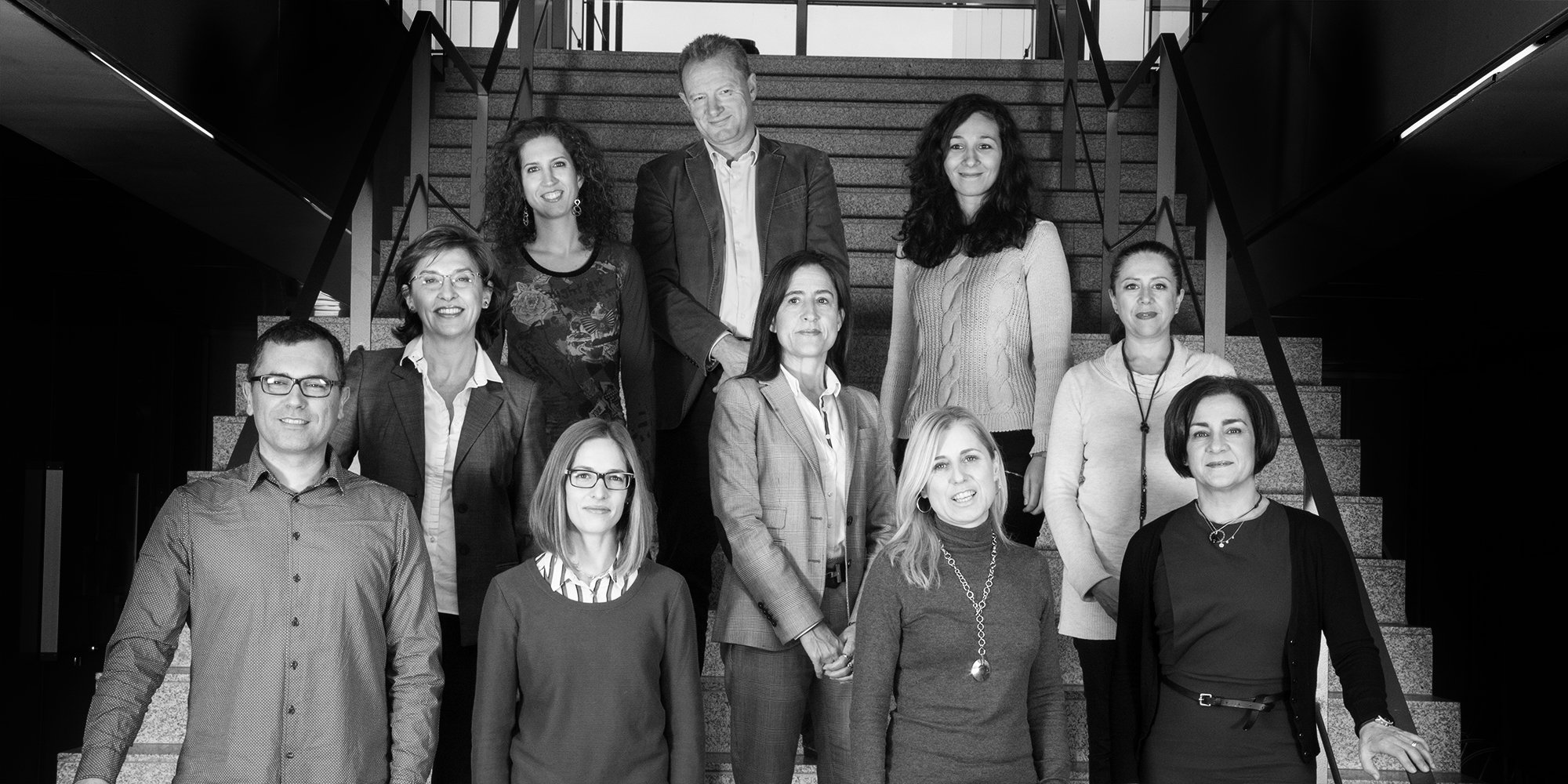
The 16 current members of the team*, directed by Isabel García Izquierdo are: Andreu Beltrán, Anabel Borja, Pilar Ezpeleta, Silvia Gamero, Cristina García, Steve Jennings, Vicent Montalt, Esther Monzó, Pilar Civera, Pilar Ordóñez, Tomás Conde, Rafael Aleixandre (Instituto López Piñero, Universitat de València) and Natividad Juste (FPI Spanish research and teaching fellowship). As we note in the section about the team itself, to the above list we must add the collaborators, who offer their invaluable support to the project.
Research aims
From a theoretical and conceptual point of view, the GENTT group works on the concept of textual genre as it is applied to fields of specialised communication. The definition of this concept has been developing during our research in a rather eclectic manner, inspired by proposals from functional systemic linguistics, theory of genre applied to translation, and sociology (see our Results section). In fact, of the three perspectives adopted to provide a definition of genre (that is: the communicative, formal and cognitive aspects) GENTT research currently favors two: communicative and formal. As such, on the one hand we apply corpus linguistics to investigating formal aspects of the genre, while on the other we investigate on a sociological or socio-professional level to develop the communicative aspect of this concept.
From a methodological point of view, our investigation is empirical-descriptive and we use the tools provided for corpus linguistics. Specifically, we use the applications that have been under development in the field of translation, with a view to developing a corpus-management tool specific for translation. This is the GENTT management program which is being designed around the group’s proposals and needs. It has already received recognition from the Observatorio de Tecnologías de la Traducción (Translation Technologies Watch). In its previous version, the management of the corpus was through an Intranet within the Universitat Jaume I. With the new version, the system has been opened, according to the Web 2.0 philosophy, so as to evolve towards a more collaborative environment that will permit to search, feed and manage the corpus on-line.
As mentioned above, sociological and socio-professional research is also integrated in our project. We rely on the collaboration of expects working in the various fields of specialisation and on tools for systematizing information, such as programs for carrying out targeted surveys on the Internet, and for the statistical analysis of results obtained.
The general objective of our investigation, as described above, is the development of applications for the notion of genre in the field of translation -in particular, of specialised translation. This general objective can be expressed in terms of the following specific objectives:
- To reflect on the concept of text genre to propose an exhaustive definition thereof, and to undertake a critical evaluation of the differing theories that underlie the concept. In this manner, we aim to identify those aspects which, in our opinion, best characterise the notion for its application in translation.
- To establish the tree of genre prototypes in the three main fields under study (legal, medical and technical) in as precise a manner as possible, given the changing, hybrid nature of the concept we endorse –see for example I. García Izquierdo (coord.) (2005). This is tackled through constant observation of the socio-professional world and takes into account the opinions of expert users, while we undertake an empirical analysis of the compiled corpus texts.
- To compile a multilingual comparable corpus of textual genres (with 5 working languages) for the legal, technical and medical fields in the form of an electronic encyclopaedia. It will facilitate research in the various abovementioned areas and is projected as a textual, conceptual, terminological and linguistic consultation tool for specialists and non-specialists alike.
- To create -to this end- a computer infraestructure that facilitates improvement in both the formative field and in the professional practice of specialised translation.
- To demonstrate, through empirical-descriptive research, the advantages inherent in using this concept in the field of translation, both in research and in teaching.
- To provide researchers with a methodological model for genre investigation. This includes not only the definition of the most relevant aspects that contribute to the nation as described above, but also procedures for genre selection and the advantages of using the corpus methodology.
- Lastly, to keep alive the debate about the pertinence of the characterisation proposals we make, in the light of the results that the research itself provides us with; and to continue researching with the critical attitude that has so far allowed us to follow the path we have taken.
Castelló, November 2006
* We would like to thank all those people who, in previous stages of the research, have become part of the team, either as researchers or as collaborators, and thus have contributed to the development of the investigation on genres.